July 23, 2026
International chain track brings the bike battery back into the spotlight
April 14, 2026
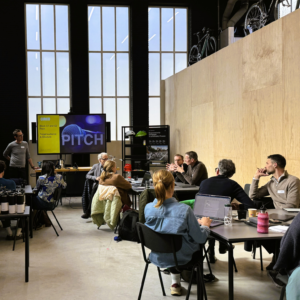
No single company is large enough to solve this problem on its own. That conclusion was echoed last Thursday, March 12, in the conference room at Specialized Bicycle Components in Arnhem, where some twenty organizations from the Netherlands and Germany wrapped up the third and final day of the international CIRCO Chain Track focused on e-bike batteries. After two months of collaboration, the participants presented concrete pilot projects and joint system designs. The result: a shared blueprint for a collaborative reuse system, with clear steps toward scaling up.
Regulatory pressure and strategic scarcity make waiting an unfeasible option
Global demand for batteries is growing rapidly, driven by e-bikes, electric vehicles, industrial electrification, and stationary energy storage. This is increasing pressure on critical materials such as cobalt, lithium, nickel, and manganese. Recycling exists, but reuse and repair—which preserve more value—are barely organized. A major bottleneck here is that once a battery reaches an end user, we lose track of its location, condition, and residual value. Without that information, high-quality reuse is structurally difficult to organize.
At the same time, the European Battery Regulation (EU 2023/1542) requires companies to take concrete action: manufacturers and importers must join a collective collection and recycling organization, with targets of up to 51 percent collection by the end of 2028 and 61 percent by the end of 2031. On top of that, there are minimum requirements for recycled material content and recovery targets for lithium: 50 percent by the end of 2027, rising to 80 percent by the end of 2031. The ESPR (Ecodesign for Sustainable Products Regulation) adds design requirements: products must be demonstrably repairable and recyclable, and the carbon footprint across the entire lifecycle must be reported. For batteries, the Battery Regulation also introduces a phased requirement for a Digital Product Passport, with the exact implementation timeline for each battery category still to be determined. The pressure is multifaceted: strategic, regulatory, and IT-related.
In early 2026, CIRCO launched the first international Value Chain Track on this topic, in collaboration with Shift Cycling Culture, Battery Competence Cluster, Oost NL, and the Effizienz-Agentur NRW on behalf of CIRCO Germany. The track was facilitated by trainers Mars Holwerda (NL) and Nadine Tiedemann (CIRCO Hub for North Rhine-Westphalia) and sector expert Erik Bronsvoort (Shift Cycling Culture).
The roundtable included both Dutch and German companies, among them several globally active bicycle brands: Accell Group, Bosch eBike Systems, Ebikepartners, Fietsned, FOCUS Bikes, Koninklijke Gazelle, Lease a Bike Nederland, NOWOS, ROSE Bikes, Shimano Europe Group, Specialized Bicycle Components, Stichting OPEN, Studio MOM, and Zhero Systems.
From identifying opportunities to launching concrete pilot projects
In the Chain-Track, participants identify value loss in the supply chain, explore (business) opportunities, and work together toward solutions. Program Manager Pieter van Os sees a pattern in the results that he frequently encounters in CIRCO projects: individual companies have already developed parts of a solution, but the scale is lacking.“Together, the participating companies have defined a robust system that combines collection with more efficient logistics, better repurposing based on current battery value, and a shared knowledge base. This increases volumes and quality, preserves higher value, and makes the flow more predictable.”
The fact that individual companies need each other in this regard is a familiar pattern in Keten-Tracks: it is only when parties come together that the logic of collaboration becomes apparent. An additional motivation in this track: some of the participants must comply with the new battery regulations in the relatively near future.
Erik Bronsvoort of Shift Cycling Culture is clear about what is needed: “No single company is big enough to solve this problem on its own. We need collaboration throughout the entire supply chain, from design through sales and repair to collection. It is precisely the diversity of both large and small companies, spread across the supply chain, that is crucial to a functioning system.”
A blueprint for more supply chains
It was no coincidence that 17 organizations from the Netherlands and Germany came together here. Drawing on its extensive network in the international cycling industry, Shift Cycling Culture brought the right companies to the table. CIRCO NRW did the same on the German side, actively recruiting and mobilizing within its own region. Together with CIRCO Oost Nederland and the Battery Competence Cluster, they formed the organizational backbone of the track.
Reuse isn’t organized on a company-by-company basis, but rather across the entire supply chain. This requires shared ownership: joint agreements on roles, flows, and value sharing. Without that foundation, ambitions will remain stuck at the company level.
This approach is not new. The Dutch Solar Re-use System for Solar PV also began with CIRCO Supply Chain Tracks focused on solar panels, mounting systems, and inverters, followed by pilot projects to test the blueprint. A coalition of approximately thirty parties is now working on the nationwide rollout of a scalable reuse system for complete PV installations. This process demonstrates what is possible when the supply chain takes the time to build the system step by step. The Supply Chain Track for e-batteries is following the same path, now for the first time at the international level.
“The international exchange between German and Dutch companies added exceptional value. It demonstrated just how crucial cross-border cooperation within the circular economy is for tackling major challenges and developing solutions that go beyond national perspectives,” emphasizes Nadine Tiedemann, manager of the CIRCO Hub North Rhine-Westphalia.
The Keten-Track is now part of a broader initiative: the Battery Value Creation Program, a joint initiative of Shift Cycling Culture, CIRCO, Oost NL, and EFA NRW, aimed at systematically organizing value retention within the e-bike supply chain.
What needs to happen now
Three pilot projects have been proposed to demonstrate the system’s effectiveness in practice, step by step. Pieter van Os is cautiously optimistic, but also keeps his feet on the ground: “An initial estimate of the market potential for the Netherlands alone comes to 100 to 200 million euros per year, resulting in substantial environmental benefits and greater strategic autonomy. That justifies a serious investment in the pilot projects. To finance this, we are currently working on a smart phasing plan involving contributions from both industry partners and public funding, part of which has already been committed.”
A blueprint for the Netherlands and Germany, with the potential to serve as a foundation for rollout in other European countries. The groundwork has been laid.
Photo courtesy of our partner Effizienz-Agentur NRW (CIRCO North Rhine-Westphalia)