August 27, 2026
Ground and Product Passport as driver for innovation in mechanical engineering food sector as driver for innovation in mechanical engineering food sector
October 01, 2025
This reflection on the sector-wide session for a circular manufacturing industry was written by Circular Manufacturing. View the original article.
An industry in flux: Land and Product Passport central
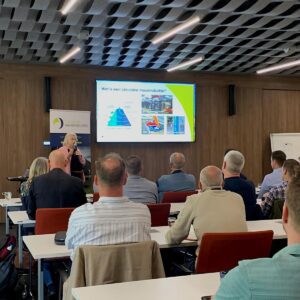
On September 16, 2025, over thirty representatives from the entire chain of mechanical engineering for the food industry gathered at the Koninklijke Metaalunie in Nieuwegein. End users, machine builders, suppliers, colleges and policy makers came together for an inspiring session around the Ground and Product Passport - a tool that is becoming increasingly important for the future-proofing of the sector.
Broad-based initiatives and collaboration
The meeting was organized by Circular Manufacturing Foundation, in collaboration with Hygienic Design Network and Circonnect. This very collaboration symbolizes the urgency and need to take circular steps with the entire chain. The day offered plenty of space for sharing insights, discussing challenges and exploring concrete next steps.
Practice: Company case Fluidor Equipment
One of the highlights was the company case of Fluidor Equipment. Rob Wouters, Manager of R&D, candidly shared his experiences implementing the Soil and Product Passport. He emphasized that prioritizing circularity in daily operations is no easy task, but it is a strategic choice that ensures the company's future. With the help of a CIRCO Track, Fluidor was able to get started internally, taking the first steps toward a Soil and Product Passport.
Utility, need and challenges
Hans van der Steen of Hygienic Design Network took the attendees through the content and relevance of such product passports. Due to developments in laws and regulations and the growing demand from both customers and suppliers, the urgency is rapidly increasing. Recording essential product information - such as raw material composition, lifespan, environmental impact and value retention - enables companies to meet requirements from the chain and future regulations. Hans emphasized that the key is to start with what is within reach and gradually go in depth from there in collecting relevant data. The upcoming publication of the Guideline Soil and Product Passport Machine Construction Food will provide practical guidance in this regard.
Work session: learning together and making choices
In a hands-on work session, participants divided into three groups, under the guidance of experts from Circonnect, got to work actively. The filling-in exercise proved challenging, mainly because of the complexity of data collection and the need for collaboration. The discussion revolved around the question: what data do you start with and how do you get it? It became clear that a lot of valuable information is scattered throughout the chain - with customers, suppliers and their partners. Collaboration proved crucial in this regard.
Perspectives from the chain
Machine builders, component and part machine manufacturers are increasingly recognizing the importance of the Ground and Product Passport. End users also play a key role: they benefit from transparent, substantiated data on the life cycle and environmental impact of machines. This allows them to translate their sustainable ambitions into concrete purchasing criteria. "Value retention can be decisive for the user," says Hans van der Steen.
CIRCO Chain Track: taking steps together
To accelerate the movement toward Land and Product Passports, the CIRCO Chain Track was introduced as a possible first step. In it, chain partners work together to develop circular business models and exchange knowledge. This joint approach helps break down barriers around data and collaboration.
Networking and concrete next steps
The closing drinks provided an opportunity to talk informally and make new connections. In a relaxed atmosphere, experiences were shared and ideas for future cooperation were immediately generated. Participants indicated they were inspired and see plenty of opportunities to start working with Land and Product Passports themselves within twelve months.
Conclusion: awareness, connection and action
The session around Soil and Product Passports in the mechanical engineering food sector brought important insights and practical tools. The urgency to act is widely shared, with collaboration and data sharing central. Networks such as Circular Manufacturing, Hygienic Design Network and Circonnect provide valuable support. It is now up to companies to take responsibility and make the move to a Land and Product Passport. The knowledge gained and new connections provide a solid foundation for further innovation - a movement that is unstoppable.
Questions about this? Contact Circonnect at info@circonnect.org.