What we will set in motion together in 2026

The raw materials transition is crucial for the future earning capacity of the Netherlands, for the security of supply of raw materials and the resilience of our production chains, and for reducing environmental impact. That is why Circonnect, with the support of the Ministries of Infrastructure and Water Management and Economic Affairs, and together with regional and industry partners, is accelerating the transition in the Netherlands and beyond. This ensures that companies in the manufacturing industry, plastics, construction, and consumer goods develop new propositions and organize chain cooperation through circular design.

Browse through the Impact Update or download the clickable PDF version.

Download the Impact Update

                         Circonnect in key figures

3,800 Dutch success stories

In collaboration with the creative industry, knowledge institutions, trade associations, regional accelerators, and (decentralized) governments, Circonnect has supported approximately 3,800 innovative companies in developing circular propositions and chain collaboration. Each of these success stories has been made possible thanks to our open source tools, knowledge publications, and workshops. Innovating a product, service, or business model is not something a company can tackle alone. Moreover, sectors face similar challenges, such as the security of supply of raw materials. These collective problems require a shared approach. Circonnect makes this possible. This year, we will once again help partners set long-term goals, make choices, and implement interventions.

Practical example: strategic innovation with circular data

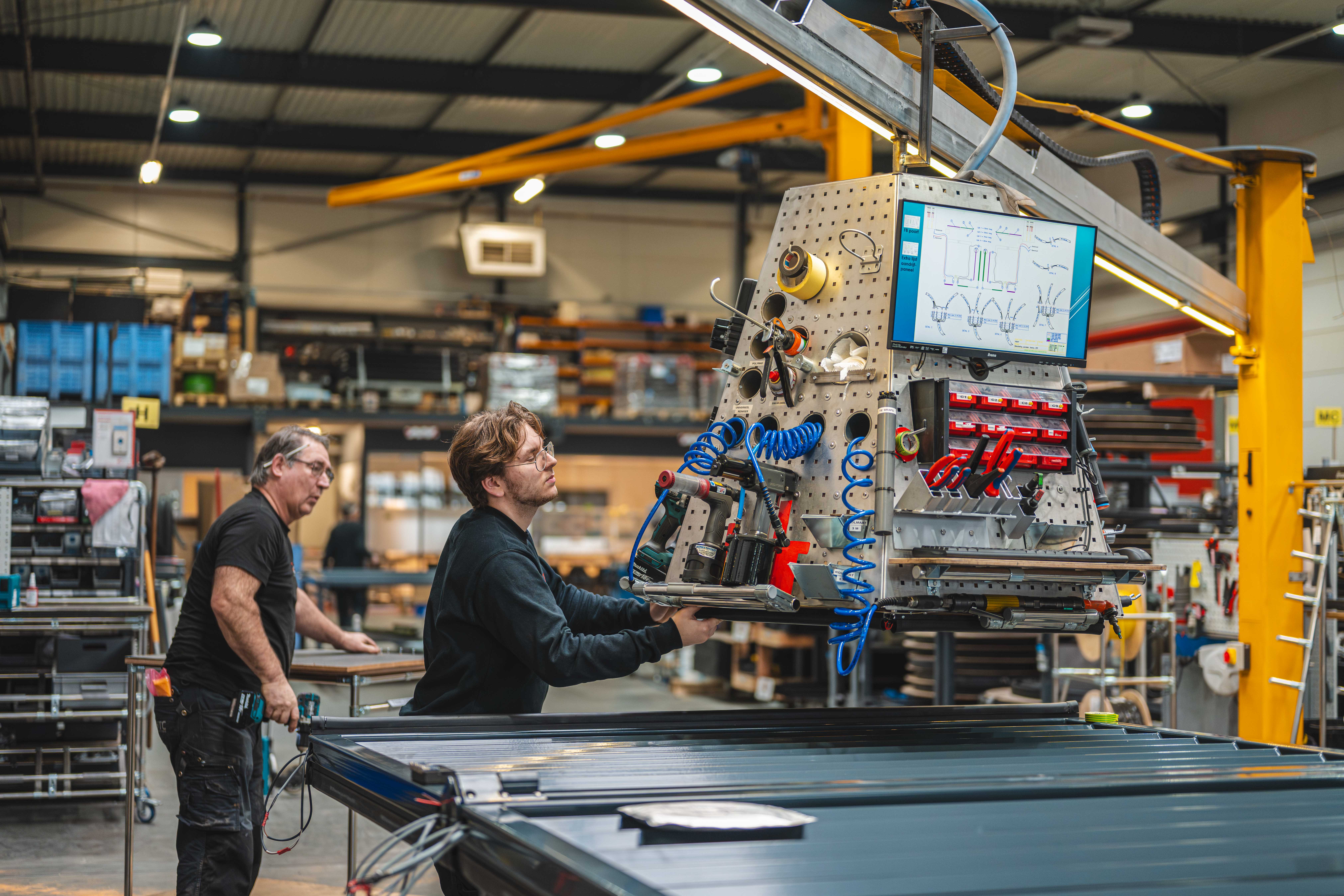
Raw material and product data are the keys to future-proof business in the manufacturing industry. Because with insight into what your products contain, where they are, and how they are maintained, you can better manage the security of raw material supply, cost savings, sustainability, and strategic innovation. Rob Wouters of Fluidor, Dick van de Linde and Pieter Nuijten of VDL Hapro, and Hans van der Steen of Hygienic Design Network / Metaalunie share how they approach this.
Results for the manufacturing industry within the framework of the National Raw Materials Strategy

Circonnect activates a broad network of partners who deploy the tools at companies in the sector and region. Collaboration with industry organizations and regional partners ensures broad reach and targeted connection of resources for pilot projects, implementation, and upscaling. By initiating and facilitating activities at different levels and actively connecting them, coherence and acceleration in implementation are created and the impact of the activities is structurally increased. Below is a biannual update on developments in the product groups.


With Circonnect tools, companies, chains, and sectors build their own future

Circonnect makes knowledge and design tools applicable in a coherent manner at three levels: companies and designers, chains, and product groups. The three levels reinforce each other in a continuous interaction. Tools at the product group level are used to establish a joint long-term vision in which goals, choices, and interventions are coordinated, partly based on insights from companies and chains. At the chain level, companies collaborate on projects in which solutions are developed and tested, while experiences and bottlenecks from these projects feed back into the roadmap approach at the product group level. At the company level, individual innovations are developed and scaled up. Feedback from companies that encounter structural barriers can lead to interventions at the product group level.

Business tools

For strategic innovation of products, services, and business models

Companies have specific knowledge questions about their circular product design or business case. Tools are made available in a Do It Yourself and Do It Together format, enabling them to make rapid progress.


Chain tools

Shared approach to tackling collective challenges

Some questions cannot be answered by companies individually but require cooperation. Chains are facilitated in cooperation to create return systems, design agreements, and standardization.


Industry tools

Setting long-term goals, making choices, and implementing interventions

At the product group level, you want to provide a framework for individual and chain-oriented innovation within a public-private coordination framework. These tools provide insight into what is possible and where success can be achieved in the short term.


View the Circonnect tools here or download the clickable PDF.


Circular design as a driver for the raw materials transition and so much more

Publicly accessible and practical tools are essential for the raw materials transition. Dutch companies, chains, and sectors need knowledge and support to achieve strategic autonomy, guarantee earning capacity, and reduce environmental impact. Since 2022, Circonnect has been bringing together organizations that are involved in circular design at various levels and from multiple disciplines. Together, the partners involved ensure that companies and designers have access to tailored and applicable design tools and scientific and practical knowledge about circular design that support them in solving specific design challenges they face. In this way, we make a concrete contribution to the National Raw Materials Strategy and the National Circular Economy Program.