September 23, 2026
Circular design as a driver for a future-proof economy
December 18, 2025
The transition to a circular economy has been on the agenda for years, but in 2025 the urgency is more palpable than ever. Global developments—from geopolitical tensions to raw material shortages and the rapidly changing dynamics in international trade chains—show how vulnerable our current linear economy is. Security of supply is (once again) high on the agenda. At the same time, there is increasing pressure to make material flows transparent and reduce environmental impact.
Companies in all sectors are looking for ways to remain agile while becoming strategically autonomous and future-proof. In this context, circular design is emerging as one of the most powerful drivers of change for all sectors. Not as a 'nice to have', but as a strategic prerequisite for continuity, innovation, and competitiveness.
The urgency is increasing; the creative design profession offers a valuable entry point.
Circular design offers a solution precisely here. By focusing on value retention and implementing circular design strategies, reuse, modular design, and smart use of materials, companies in an increasing number of product groups are formulating their own solutions, facilitated by Circonnect.
The 'urban mine'—the large quantity of valuable materials already present in products and buildings—is also becoming increasingly important as a source, but requires design choices that actually enable reuse.
This shifts circular design from a sustainability issue to a strategic vision on a current problem: How do we maintain control over raw materials and remain competitive in a world where certainty is becoming less and less self-evident?
This is precisely where design-driven innovation shows its strength. Circonnect supports this innovation path by developing and applying practical design tools, encouraging concrete steps with CIRCO Tracks and Chain Tracks, and facilitating development at the level of entire product groups with the Roadmap Approach. By working together in a targeted manner at different levels, we are setting entire sectors in motion together with our partners.
A highway for production, a cart track for reuse
In 2025, we organized Chain Tracks with various CIRCO Hubs & trainers on topics such as Electrolysers, Air Ducts, PV Inverters, Maritime Parts & Components, and Offshore Wind. Together, various players in the chain addressed the question: How can we prevent products from ending up in landfills at the end of their useful life? By bringing chain partners together—manufacturers, suppliers, users, collectors, and recyclers—we not only create a shared understanding, but above all, concrete agreements and joint actions.
The main challenge that companies themselves repeatedly identify when they look at the chain together is the lack of a well-designed system for reuse. We are all very good at making new products, but when it comes to taking them back and reusing them... there is still a world to be won.
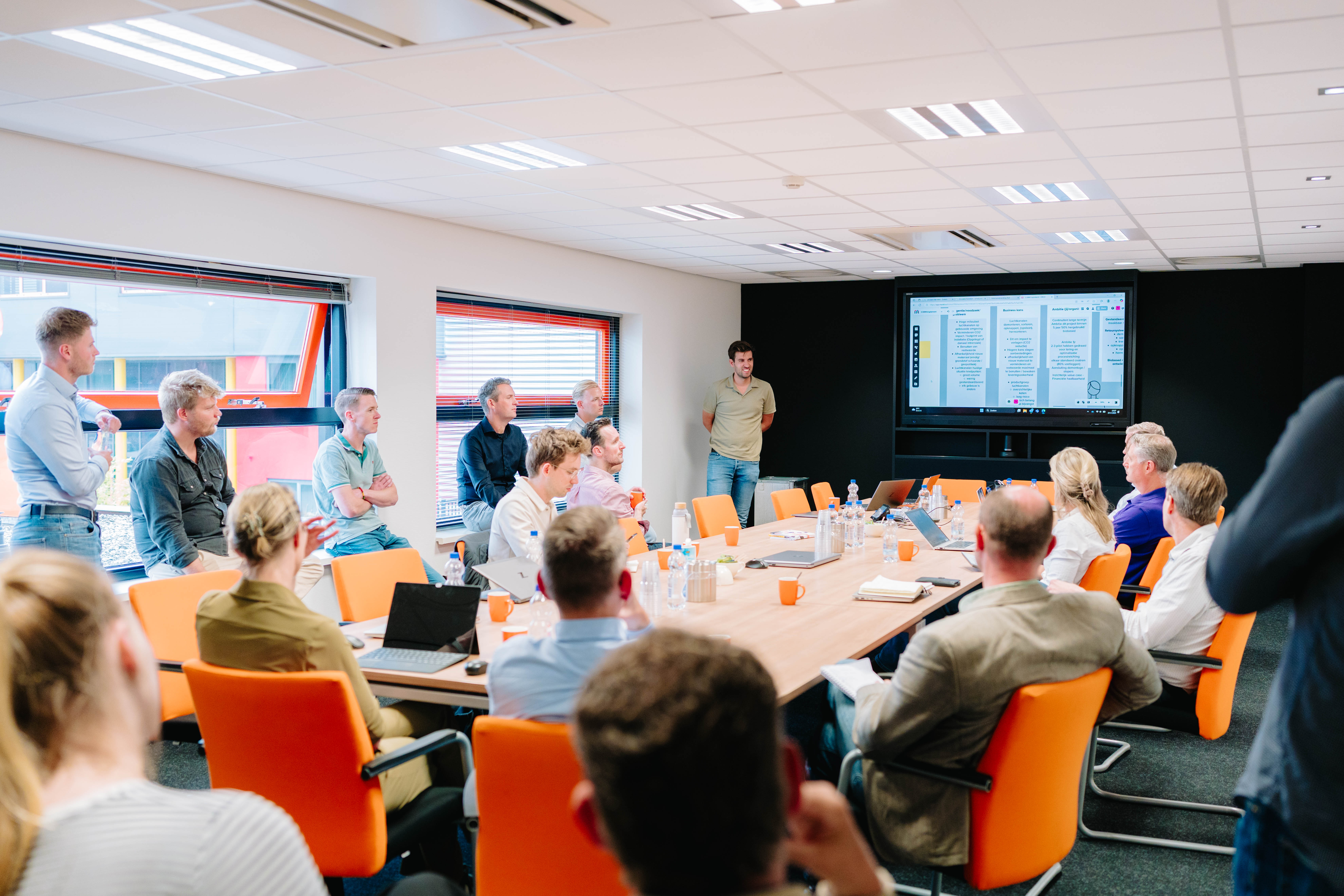
This insight forms the starting point for concrete design work in the CIRCO Chain Tracks: jointly designing new reuse systems that enable future-proof entrepreneurship, reduce delivery risks, and at the same time unlock new business opportunities and earning potential. Moreover, it helps companies realize that the end of the chain is not somewhere far away; all products eventually come back here, which means that we also have the responsibility and the opportunity to turn them into value again.
Case: Circular PV
Over the next ten years, solar PV will become the largest source of e-waste in the Netherlands, and processing these discarded PV systems will be a major challenge. Following previous successful CIRCO Chain Tracks on solar panels and mounting frames, CIRCO Hub Noord-Holland organized the third Chain Track within solar PV this fall in collaboration with Impact Hub Amsterdam and trainers Bas Hillerström and Niels van Olffren. The entire chain surrounding the inverters came to the table, including installers, consultants, waste processors, and municipalities. Only through collaboration can a circular system be created.
The participants have now moved on to a series of pilot projects in the Netherlands and Belgium to set up and validate the initial activities. The pilot projects focus on collection and sorting, resale via existing refurbished markets, mapping the social value of reuse, and the development of completely refurbished PV systems. The goal is to set up a working system for the reuse of inverters within three years, ready for upscaling to national implementation and possibly neighboring countries.

These results are consistent with the national chain breakthrough project Circular Solar Re-use System, funded by RVO, which was partly designed based on insights from the CIRCO Chain Tracks concerning solar panels and frames. In this movement, companies, governments, and knowledge institutions are working on scaling up the reuse and high-quality recycling of PV systems: the panels, frames, and inverters.
Design tools that help businesses move forward
Circular design is a lever for change, precisely because 80% of a product's impact is determined at this stage. In addition, new, better systems for reuse also have implications for design. This creates different design requirements and the need for better coordination and new production standards.
That is why, together with our partners, Hubs, and trainers, we are taking a big step forward this year by making a broad portfolio of tools, methodologies, and workshops available. This will enable us to make complex themes more manageable and show how design choices directly contribute to future-proof products and systems. As a result, companies will have increasingly concrete tools at their disposal to actually put circular design strategies into practice.
Among other things, we launched the Design for Repair & Remanufacturing tool, the Grip on Raw Materials workshop, and the Circular Business Model Scan, which help to gain insight into and get started with reuse potential, supply risks, and promising circular business models for a product or service.
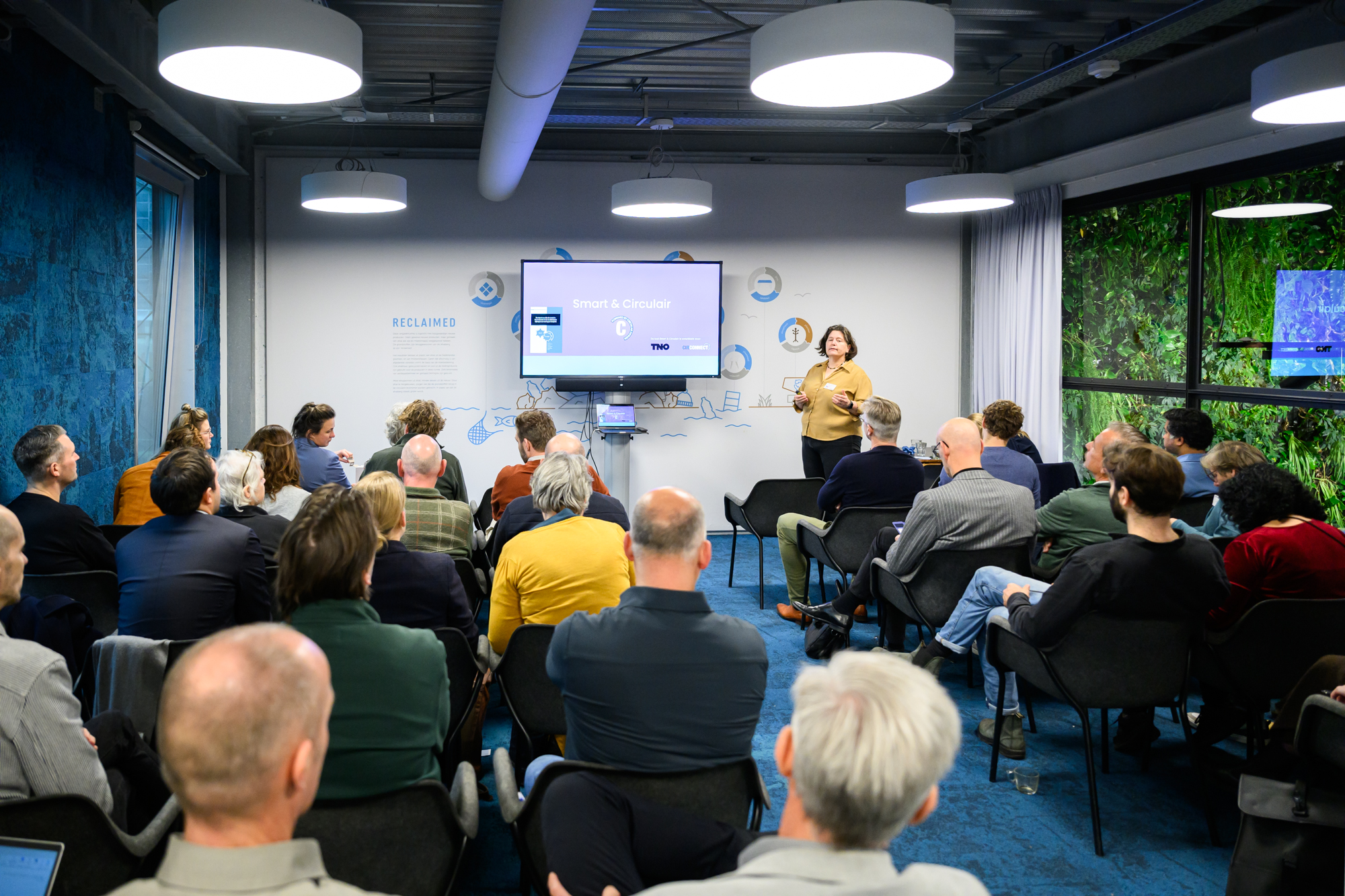
In our practical CIRCO Tracks & Classes, we demonstrate how circular design works in specific domains, such as Sportinnovator —focused on the circular redesign of sports equipment and the development of new business models—and Van Boer tot Bed, in which chain partners collaborate on local and sustainable food in healthcare. Together with BNO, we organized a number of meetings this fall, in which designers explored the ins and outs of circular design and learned to work with tools such as the Environmental Impact Tool and the Residual Value Tool. And for Modint, 27 participants from their members got to work with the CIRCO methodology.
A network that continues to grow
Our work also involves exchanging ideas, discovering new perspectives, and being inspired by others with similar questions and ambitions. That is where the seeds for further development and collaboration are planted.
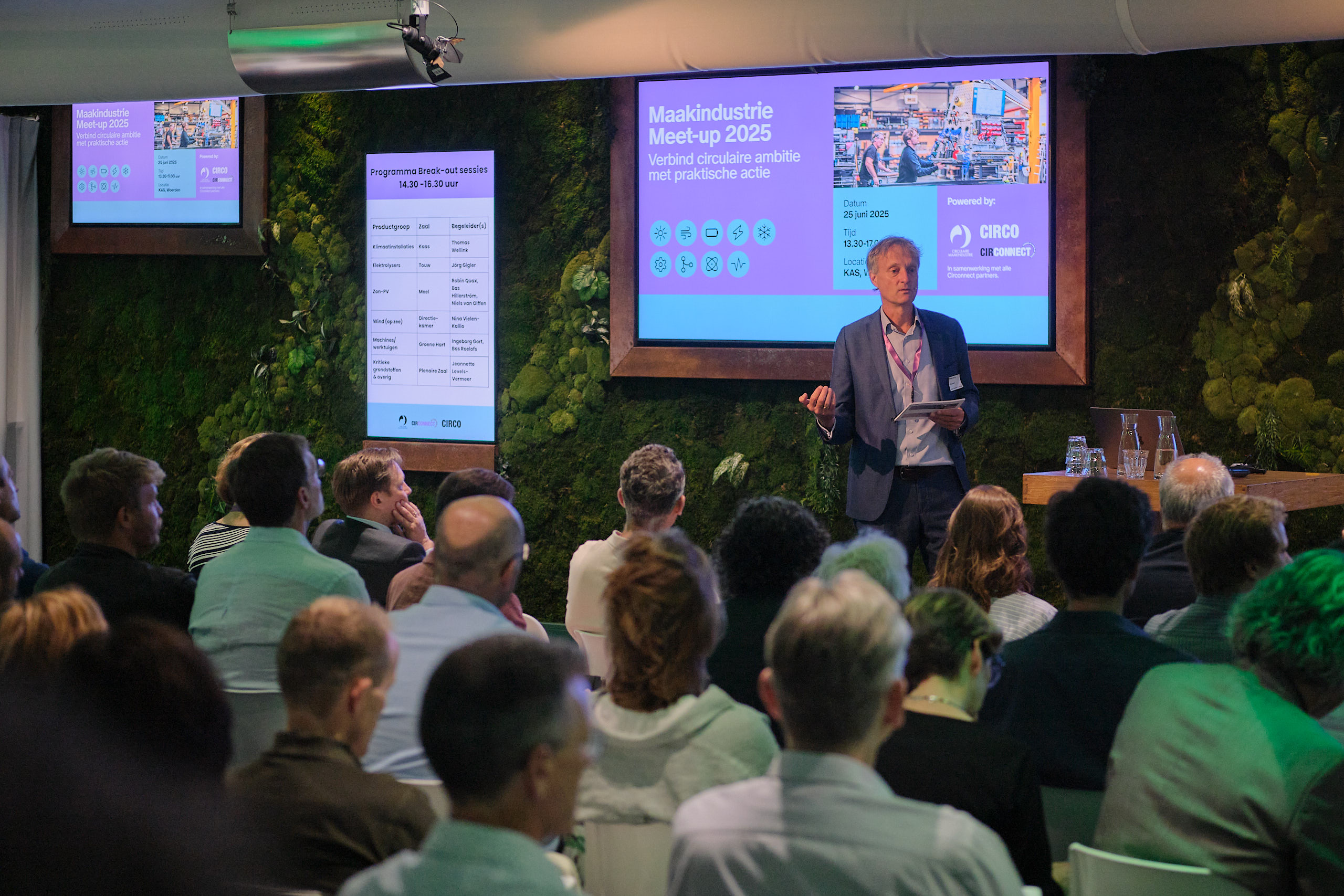
That is why we organized the Manufacturing Industry Meetup on Thursday, June 25. More than 130 participants from over 100 organizations came together with one shared goal: a circular manufacturing industry that contributes to a strategically strong and sustainable economy. If one thing became clear during the lectures, workshops, and sessions, it is that we can only achieve this circular transition if we continue to work together.
We also see this commitment at the global level. With the expansion of the international CIRCO network with hubs in Algeria, Nigeria, Hong Kong, and the German region of Baden-Württemberg, we see that the Dutch approach to circular design is gaining ground worldwide. In early 2026, we will launch a national Hub in Bangladesh and, together with our colleagues from the German CIRCO Hub efa Effizienz-Agentur NRW, OostNl, and the Battery Competence Cluster – NL, we will organize an International CIRCO Chain Track on Energy Storage Systems.
CIRCO also made significant progress in education. In Thailand, circular design is being firmly embedded with the first teacher trainer for 15 education professionals. And together with Rotterdam University of Applied Sciences and Zuyd University of Applied Sciences, we organized the first edition of the CIRCO Class, in which students are introduced to circular design strategies in an accessible way.
Together we will continue to build
This year's steps show that circular design is a structural driver for change. From the Roadmaps, which form the framework for national development within various product groups with a clear dot on the horizon, to new collaborations in the chains focused on fundamental design issues and reuse systems. And from practical tools that enable companies to get started themselves to inspiring a new generation through education: the foundation is growing stronger.
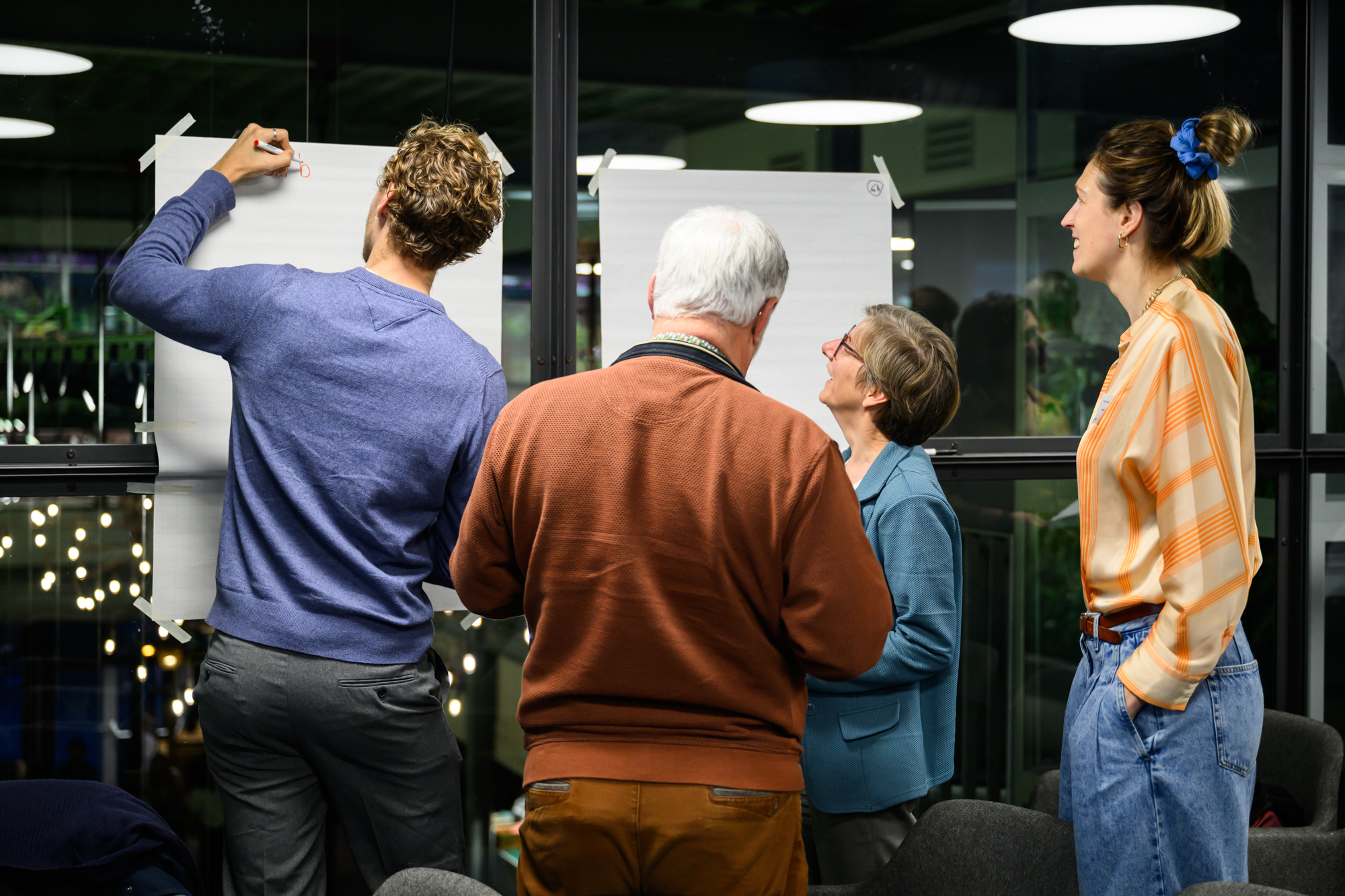
Circonnect and CIRCO will continue to work hard in 2026 to further accelerate this movement—with new tools, new hubs, new programs and tracks, and above all, new opportunities to work together to design an economy that operates within the limits of our planet and exploits the opportunities offered by a future-proof, circular system.
To everyone who wants to (continue to) do this with us: we look forward to speaking with you in the new year!
– Iris Grobben (Program Manager Circonnect & CIRCO)