From Motivations to Business Models
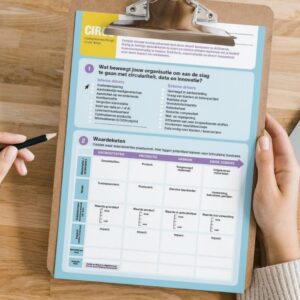
The Discussion Guide consists of six sections that you’ll work through with the organization. Each section builds on the previous one and brings you closer to a clear picture of the opportunities.
Step 1: Motivations
Together with the business owner, you’ll explore which internal and external drivers are at play—from cost savings and employment practices to laws and regulations and raw material scarcity. This will clarify which circular and innovative business models are relevant to the organization.
Step 2: Value Chain
You will examine the structure of the organization’s value chain, from raw materials to end of life: which materials, which parties, which cash flows, and what impact each phase has. You will also look at the data available for each phase and identify opportunities to make better use of that data.
Step 3: Value Pyramid
The Value Hill helps you visualize the phases of the product life cycle—from value creation to value loss. This forms the basis for developing circular propositions and strategies in collaboration with the organization.
Step 4: Circular Design Framework
Using the Circular Design Framework, you can make the value pyramid a concrete part of the organization’s design process. Together, you identify the design questions that contribute most to preserving the product’s value.
Step 5: Design Strategies
For " Products that Last" and "Products that Flow," discuss which design strategies are best suited to preserving the product's value. [link to related articles on the website]
Step 6: Business Models
You wrap up the discussion at the strategic level: Which circular business model best aligns with the organization’s strategic direction and revenue model?