July 23, 2026
What is Product as a Service?
Aug. 26, 2022
In this article, read more about exactly what product-as-as-service entails and the benefits for business owners and consumers. The article is also available for download via the button at the bottom of the page.
From possession to use: product-as-a-service in a circular economy
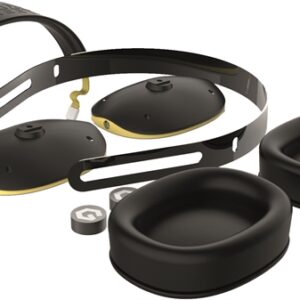
Entrepreneurs in a circular economy innovate with circular products and services. In the Inspiration Guide Circular Design with practical examples you will find the leasing model of a modular headphone by Gerrard Street, but also the Swapfiets with the blue front wheel has become indispensable. Both companies offer their products in an innovative way: Product-as-a-Service (PaaS). But what exactly is a PaaS, how does it fit into a circular economy, are consumers waiting for it, and what does it bring entrepreneurs?
What is a product-as-a-service?
Product-as-a-Service (PaaS), also known as Product-as-a-Service, is a new way of consuming where the user no longer owns a product, but enjoys the product or result through a service. The product still plays a central role, but the revenue model is not focused on selling the product, but on providing the service of the product. The entrepreneur continues to own the product and customers pay for the use of the product or its performance, such as by leasing it. The revenue is no longer a one-time payment as with the sale of the product, but is spread over the consumption period.
Unlike the traditional buying model that revolves around the product, a PaaS is the combination of both the product and a service. For this, you can deploy a new revenue model, such as an access model or a performance model.
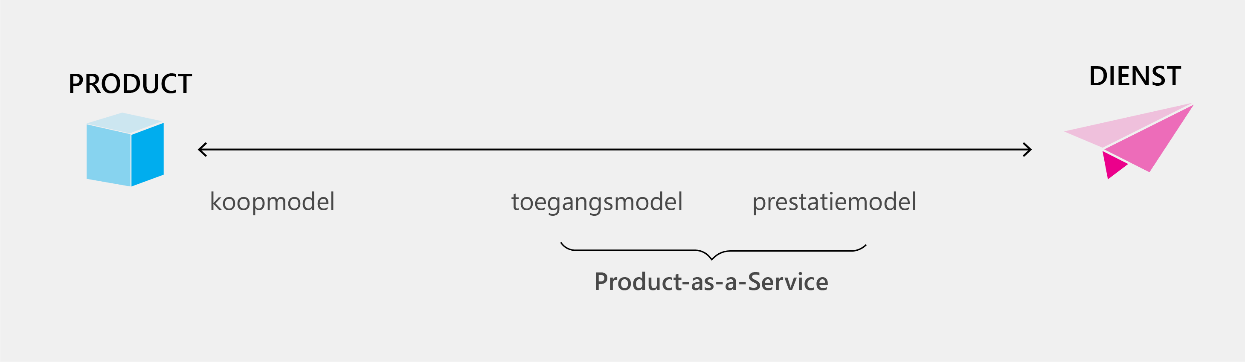
- In an access model, the user pays for access to a product. For example, by leasing a product for an extended period, as with Gerrard Street’s headphone subscription. The product remains in the hands of the same user for an extended period. The business takes care of the user’s needs by, for example, offering repairs or upgrades when necessary. Another option is paying for short-term use of a product, such as renting a fancy outfit for a party at MyDressoir or using a public bike-sharing bike with a “pay-per-use” revenue model.
- A performance model revolves around the outcome or functionality of a product. Users are interested in the quality of the service, not the product required for it. The best-known example is the Pay per Lux system from Philips Lighting and Turntoo (now Circular Lighting from Signify), where the entrepreneur provides light instead of a lamp. Users pay for hours of light; the entrepreneur decides which lamp to use to provide this functionality.
Why is offering a PaaS interesting?
Benefits of PaaS for entrepreneurs
Offering a service has several advantages over selling a product. Listed below are some of the advantages:
- Customer retention.The relationship with the customer is shifting from a one-time interaction during the sale of a product to an interactive customer relationship with recurring touchpoints. Depending on the chosen revenue model, communication with the customer takes place per use, per day, per week, or per month. Trust is an essential aspect of PaaS because a service is not as tangible as a product. Through this long-term relationship, you can learn a great deal about your users and how they use your product.
- Finance.One-time revenue from the sale of a product is replaced by recurring revenue. This makes cash flow more stable and predictable. By providing a service throughout the product’s useful life, the added value increases, and the revenue from a PaaS exceeds that from sales in the long term. However, at the startup stage, pre-financing can pose a barrier.
- Raw Material Management.By retaining ownership of a product, the entrepreneur maintains control over the product’s raw materials. The product is returned or picked up when the customer no longer wishes to use it. This allows you to invest in the supply chain with greater confidence and adapt the product design to promote a longer lifespan, repair options, refurbishment, and recycling. As an entrepreneur, you benefit from a high-quality product that lasts as long as possible, as this saves on costs associated with repairing or replacing the product.
Benefits of PaaS for users
- Satisfaction.PaaS increases user satisfaction because users no longer have to bear the burdens of ownership, such as the risk of making a bad purchase.
- Convenience and flexibility. Among other things, PaaS offers users convenience and flexibility. For example, they no longer have to worry about unexpected product repairs or maintenance. Users can also try out a product thanks to the accessibility of some business models.
- Price. Users no longer have to make a large investment in a product they use only occasionally. A car is a major investment, and it spends most of its time idle. Using a car-sharing service significantly reduces costs: you pay only for the time you use it and are no longer responsible for maintenance and repairs.
PaaS and design
Designing a Product-as-a-Service is an interaction between the design of the life of the product (the product journey) and that of the user experience (the customer journey). Entrepreneurs benefit from having the product in use as long as possible without intervention to reduce costs and promote customer satisfaction. There is therefore an incentive to develop the product and the user experience so that the product lasts and is easy to repair. In fact, the business owner saves costs when a product is repaired less often or faster. With a PaaS, it pays to design a product more robustly against misuse, and it makes sense to encourage users through the design of the service to take good care of the product.
Here are five key lessons for designing a successful PaaS .
Five key lessons for PaaS design
1. Get to know your target audience
PaaS is a new way of consuming. We are not yet used to paying for use rather than possession, and it will take some effort to make this alternative attractive. While many users consider sustainability important, it is not usually the deciding factor. To best serve users and increase adoption of PaaS, a detailed customer profile is needed. Rational and emotional influencing factors must be identified to develop an attractive value proposition. Make sure you know who your customer is and what motivates and values your customer.
2. Identify the customer pain
Identify the user's pain points in the current buying situation. For example, for owning a bicycle, pain points are bicycle lights that break frequently or a flat tire. Understanding "consumer pain points" is essential for designing a product that resonates with new users, and more importantly, for developing the right service to go with the product. Think about what your service the possible "pain killers" to eliminate consumer pain. Consumers are used to owning their products, so using the service should have a clear advantage over buying a product.
3. Service, service, service
Unburdening the customer iscrucial with PaaS. "It's about service, service, service," said Richard Burger of Swapfiets. So make sure the user is the focus and that your service provides the best experience during all phases of use.
4. Circular design
PaaS models are expected to be more sustainable because they utilize products more, extend product life and thus ultimately reduce the number of products/resources used. However, this is not a given. Therefore, product redesign must be made based on the user context.
You can encourage the right behavior from customers through good design. Homie, for example, encourages more sustainable washing by making the eco mode cheaper than other wash programs and a monthly feedback to the customer comparing their usage with Dutch averages.
If you can be sure that the customer returns the product at the end of its use, the chain is closed. But where do the used products, parts and raw materials go next? By taking responsibility as a manufacturer, from redesign to recycling your product, a system can be developed for circular material use. By reusing or refurbishing products or harvesting working parts for repair you get the maximum value out of the product.
5. Get started!
As many entrepreneurs confirm: Don't get too stuck in theory, but test your idea with users! Validate the pain points found and your answer to them in the field and sharpen your proposition.
The more parties engage in PaaS, the more normal these alternative revenue models become in the consumer landscape. Thus, more and more people are opting for a service, and fewer products are being sold. And so we are working together to unburden users and close the material cycle!
On July 8, 2020, Rijkswaterstaat and Partners for Innovation organized the webinar “From Ownership to Use.” The virtual stage was given to researcher Vivian Tunn (Delft University of Technology) and entrepreneurs Tom Leenders (Gerrard Street), Richard Burger (Swapfiets), and Colin Bom (Homie). They shared their experiences with successful “Product as a Service” (PaaS) models. Watch the webinar here.