September 23, 2026
From Insight to Impact: Pieter van Os Shares Lessons from CIRCO at the REKON Conference
October 27, 2026
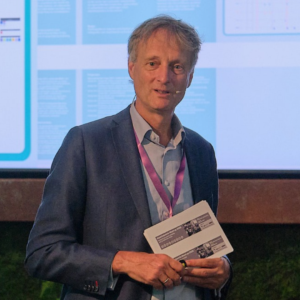
On Tuesday, November 3, Pieter van Os (Program Manager at CIRCO International) will deliver a keynote address at the opening of the Thuringian Resource Conference (REKON) in Erfurt: “From Insight to Impact: How the Netherlands Scales Circular Business Through CIRCO.” Drawing on the experiences of the more than 3,800 companies that have implemented CIRCO Tracks, he will demonstrate how circular innovation strengthens their competitiveness, resilience, and future-readiness.
Following that, he will engage in a discussion, moderated by Caro Matzko, with Prof. Dr. Katharina Reuter (Director of the Bundesverband Nachhaltige Wirtschaft, BNW), who will speak about circularity as a competitive factor.
From Curiosity to Implementation
The central theme is how to spark companies’ curiosity about the possibilities of the circular economy, at a time when other issues seem to take precedence. CIRCO, Circonnect’s validated design methodology for circular design and circular business models, helps companies take their first steps through CIRCO Tracks.
Once you get started, you’ll often find that the first step is more straightforward than expected—and that there’s a clear business incentive right from the start. A survey of CIRCO Tracks participants shows that 70% begin implementation after the program ends. During this implementation phase, new questions arise regarding strategy, collaboration within the supply chain, and the industry. Circonnect addresses these issues in collaboration with industry partners. As a result, Circonnect now operates at all three levels: company, supply chain, and industry.
Van Os approaches the circular economy as a theme for innovation, one that directly contributes to Europe’s earning power and strategic autonomy. Those who focus on value rather than loss become less dependent on scarce raw materials and see new business opportunities emerge. Circularity then follows naturally as a result of those choices.
Three Phases in the Dutch Transition
Van Os describes how the Dutch circular transition is broadly proceeding through three phases. In the first phase, the emphasis is on raising awareness: making the importance of circularity visible and relevant to businesses. Pioneers in innovation and sustainability are always the first to adopt these changes.
In the second phase, supply chains and sectors will begin to organize themselves, driven by regulations or anticipated market demand. Government and the business community will come together at the sector level. For the companies that follow suit, relevance will be the key question. To that end, Circonnect identifies the drivers for each sector: the strategic and business opportunities for a company, such as cost savings, stronger customer relationships, and delivery reliability.
The third phase, in which the Netherlands currently finds itself, centers on the approach to Priority Product Groups. Strategic autonomy plays an increasingly important role in this context. In the Roadmaps, companies, the government, and knowledge partners collaborate on a consensus-based project portfolio for each product group, which strengthens companies’ commitment. Companies seeking to take their innovation process to the next level can request more in-depth support. To this end, Circonnect develops practical tools that can be put to use immediately. Challenges that a single company cannot solve on its own can be addressed collaboratively by supply chain partners through a CIRCO Supply Chain Track or other projects.
Each phase requires something different—not only in terms of how businesses are engaged and supported, but also in terms of government coordination and collaboration within supply chains. Van Os highlights the key lessons learned from each of these three phases.
International Hub Network
Circonnect coordinates the international network of CIRCO Hubs and partners in the Netherlands and 23 other countries. In Germany, CIRCO operates four regional Hubs that bring stakeholders together and facilitate exploratory initiatives and pilot projects. This exchange works both ways. Insights at the company and product group levels from one country help companies in another country move forward. Supply chains are also connected across national borders.
About REKON
Since its first edition in 2023, REKON has grown to become Thuringia’s central platform for resource conservation, the circular economy, and the efficient use of materials and energy. The conference is organized by the Thuringian Energy Agency (ThEGA) on behalf of the Thuringian Ministry of the Environment, with the involvement of the Ministry of Economic Affairs.
The third edition is centered around the motto “Reduce consumption. Operate in a circular manner.” The conference will open with a discussion on the circular economy as a driver of climate protection and business resilience, introduced by Tilo Kummer, Thuringia’s Minister of the Environment, Energy, Nature Conservation, and Forestry.
The program also includes joint sessions and four parallel practical sessions, featuring real-world examples from Thuringia and beyond. The conference will take place at the COMCENTER Brühl in Erfurt and is aimed at executives and specialists from the business community, as well as representatives from academia, government, and politics.
Participation is free; you can register through ThEGA.